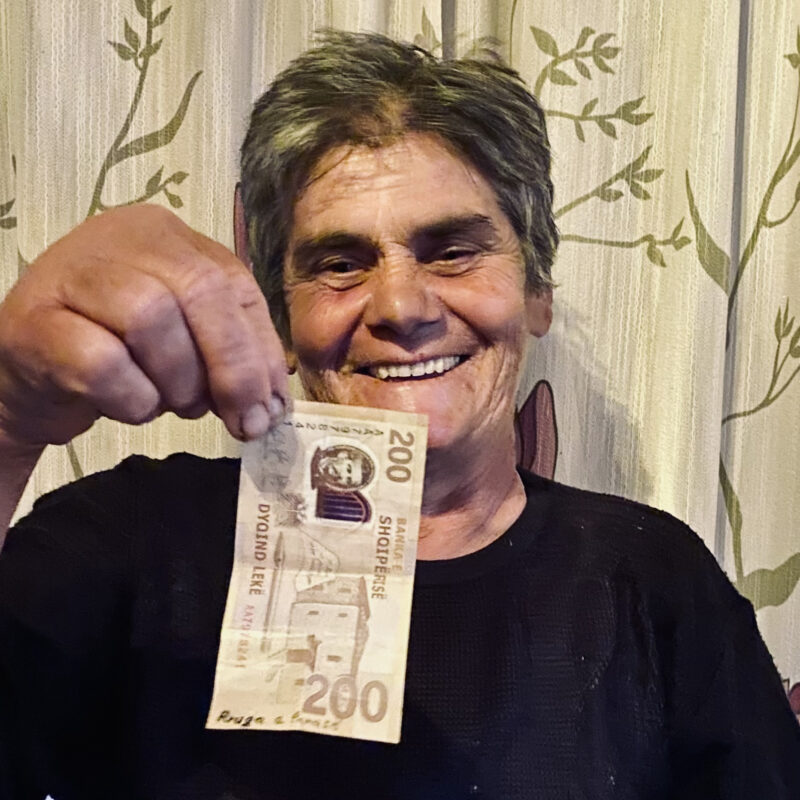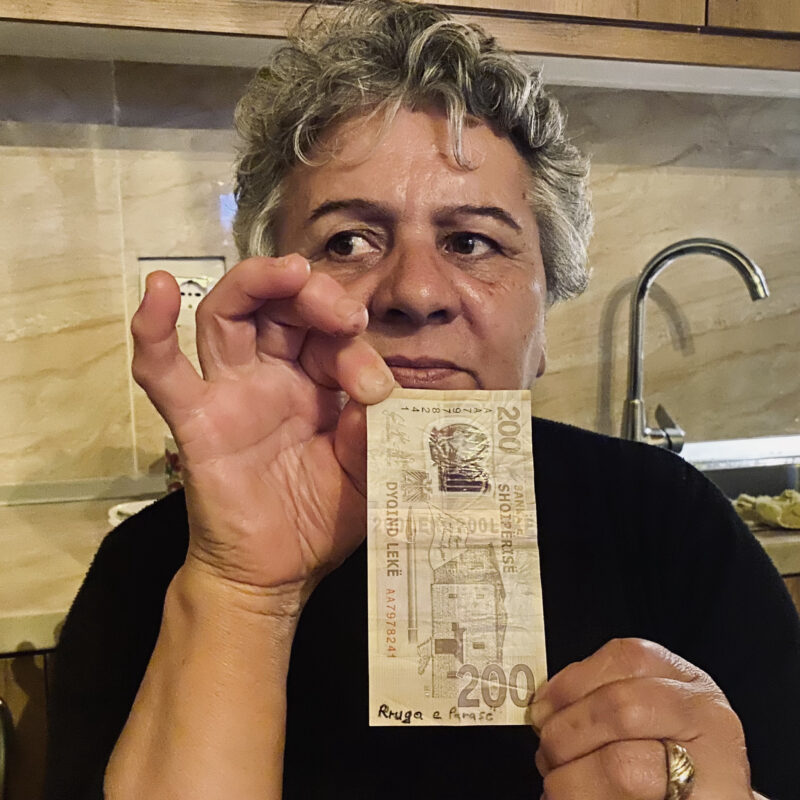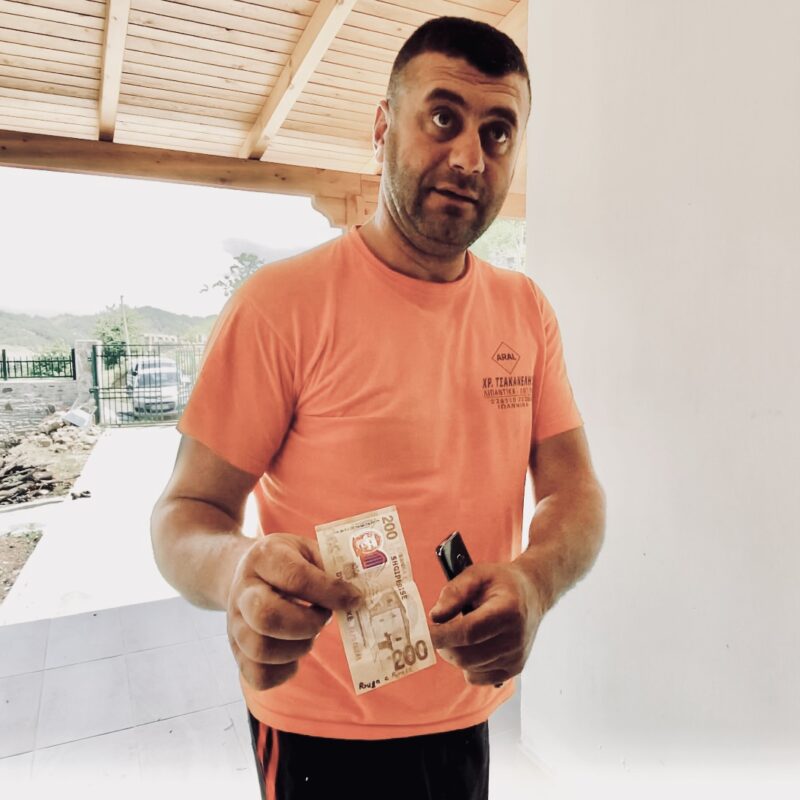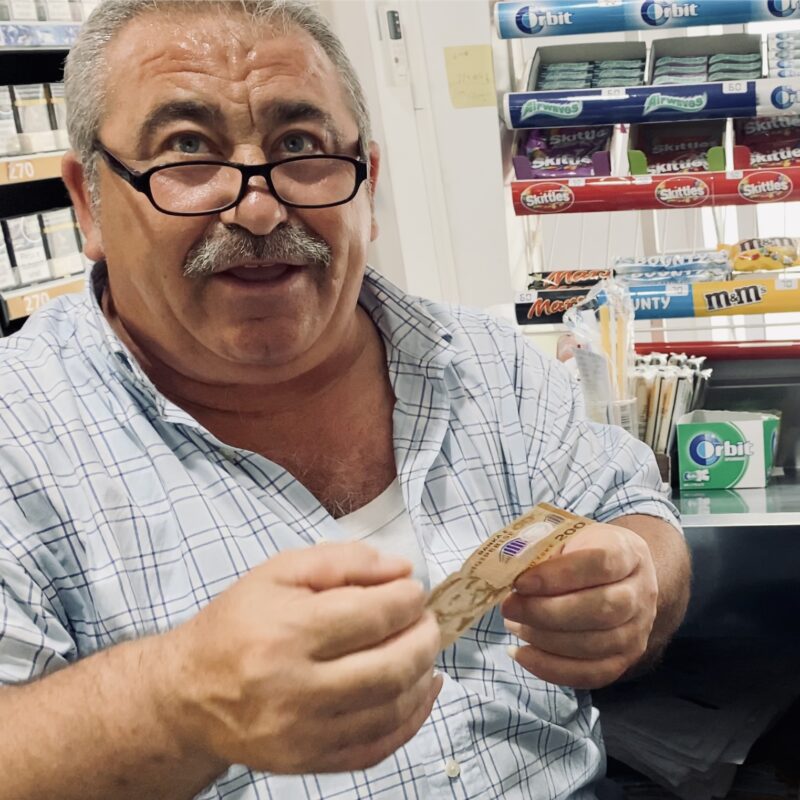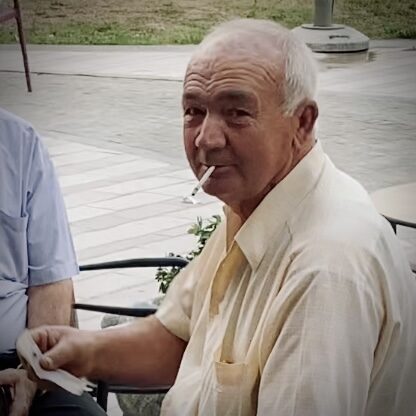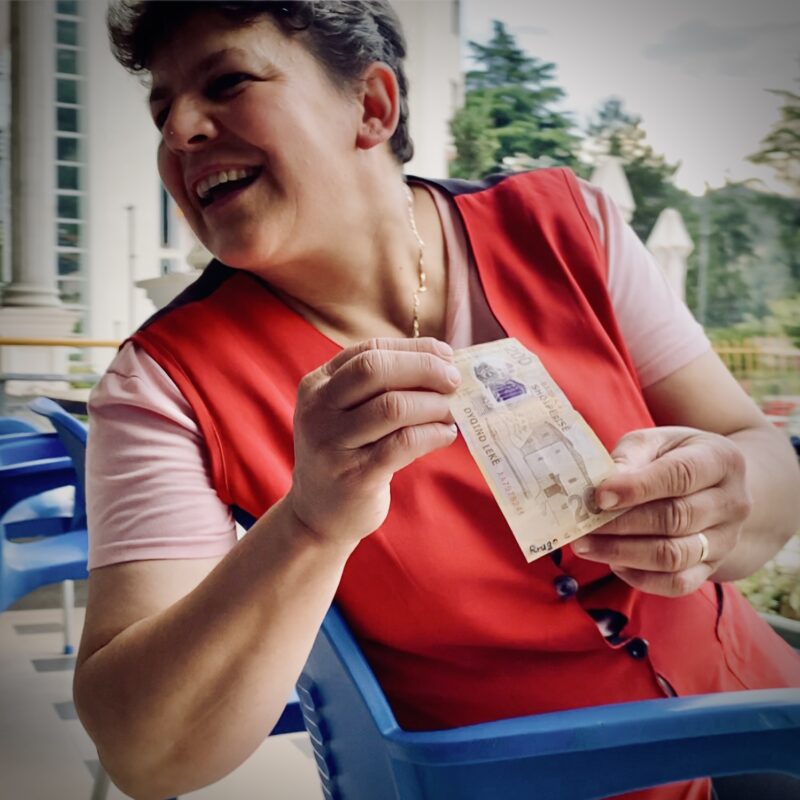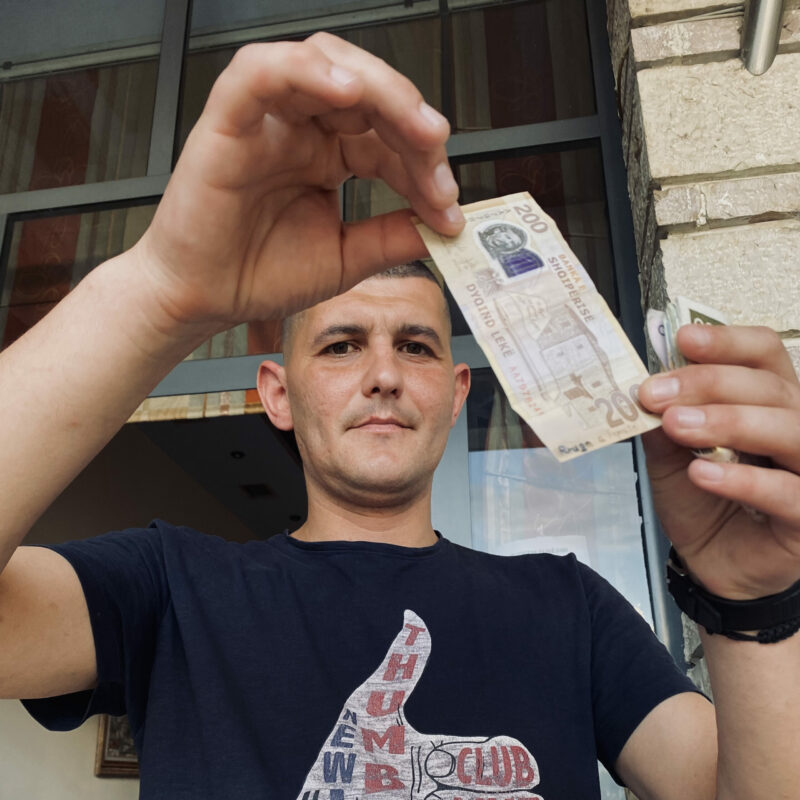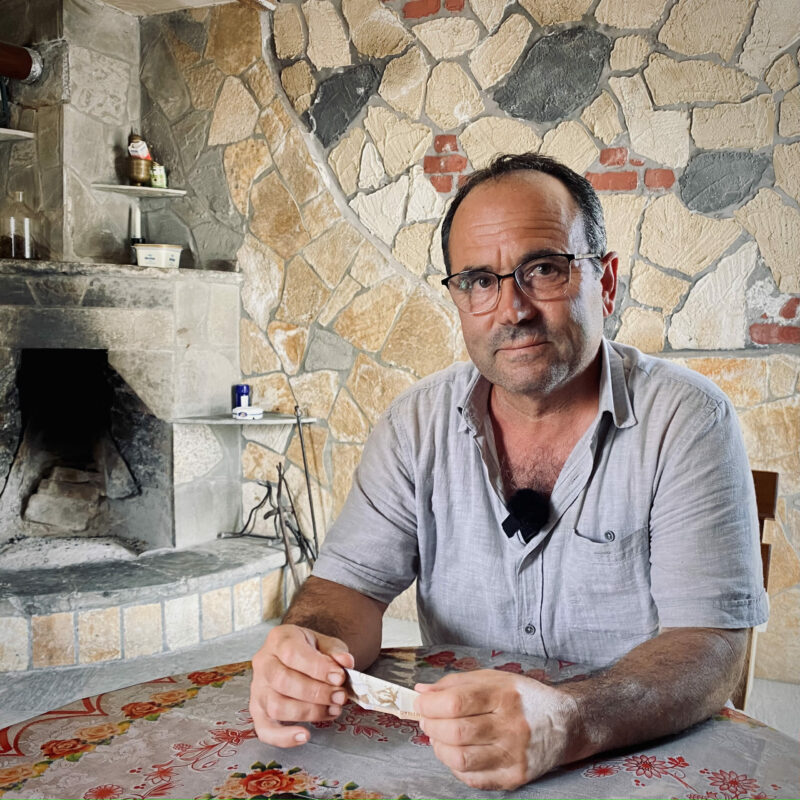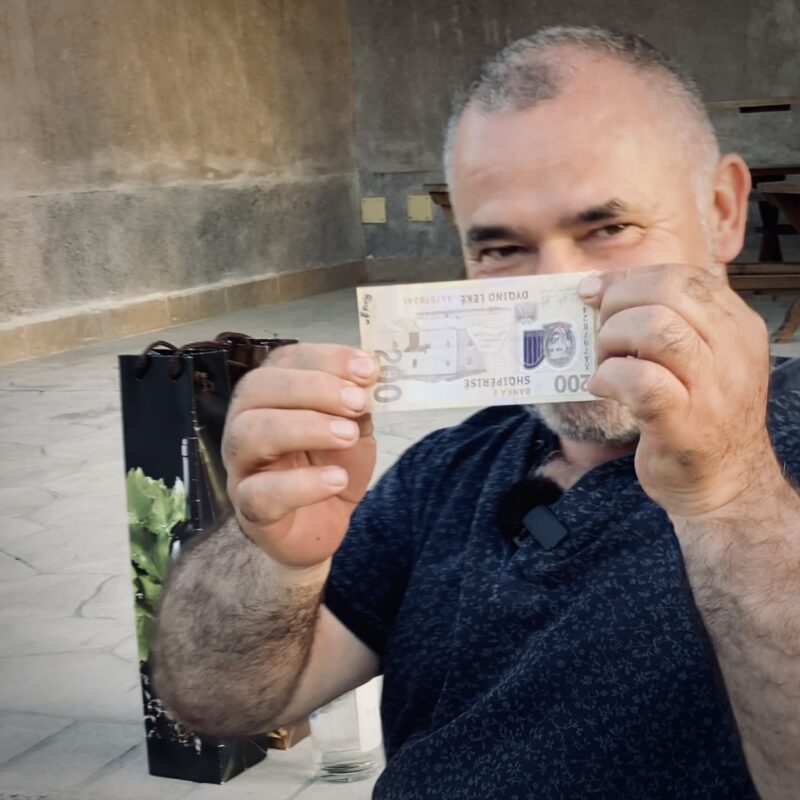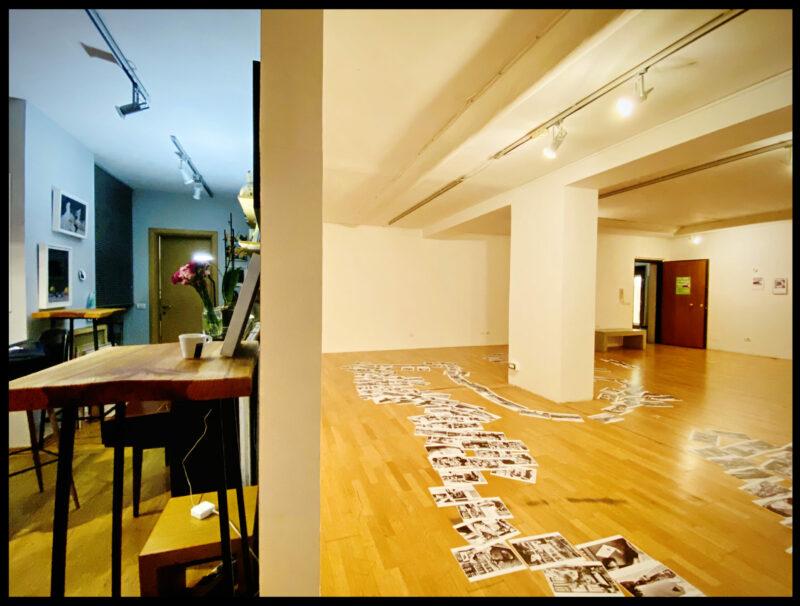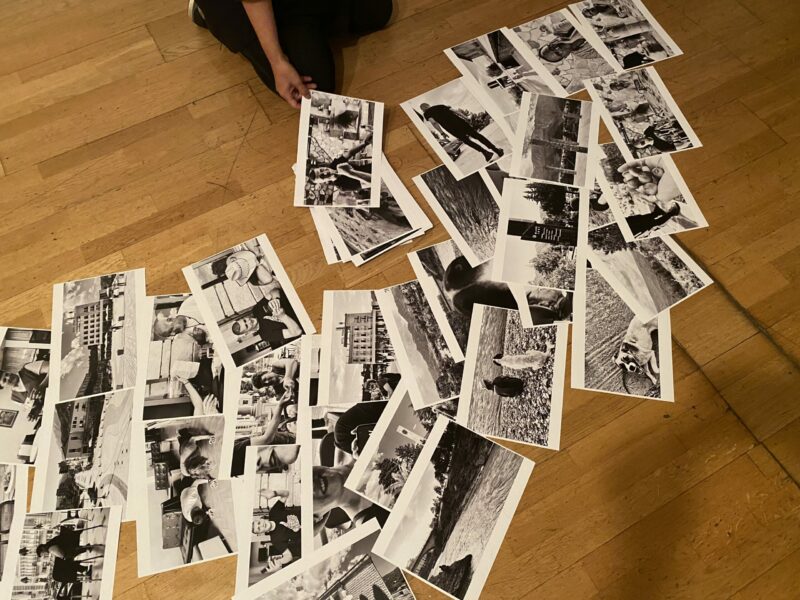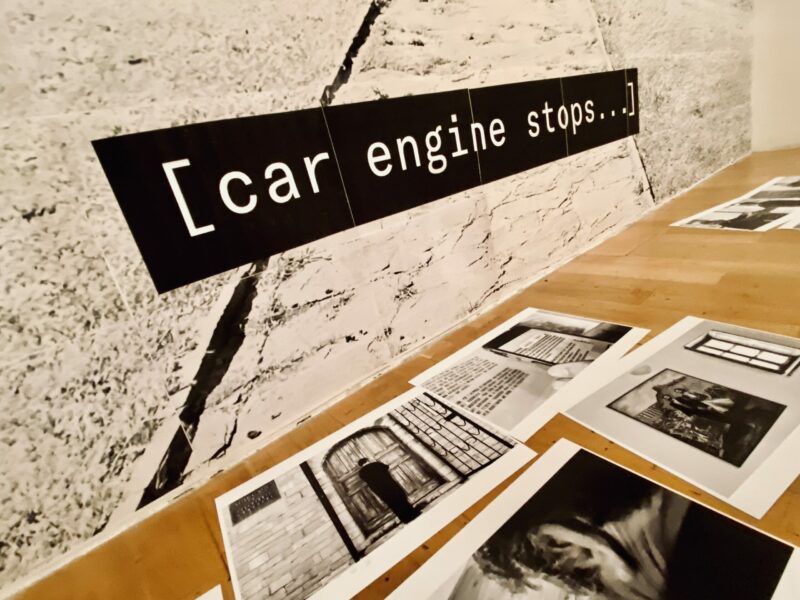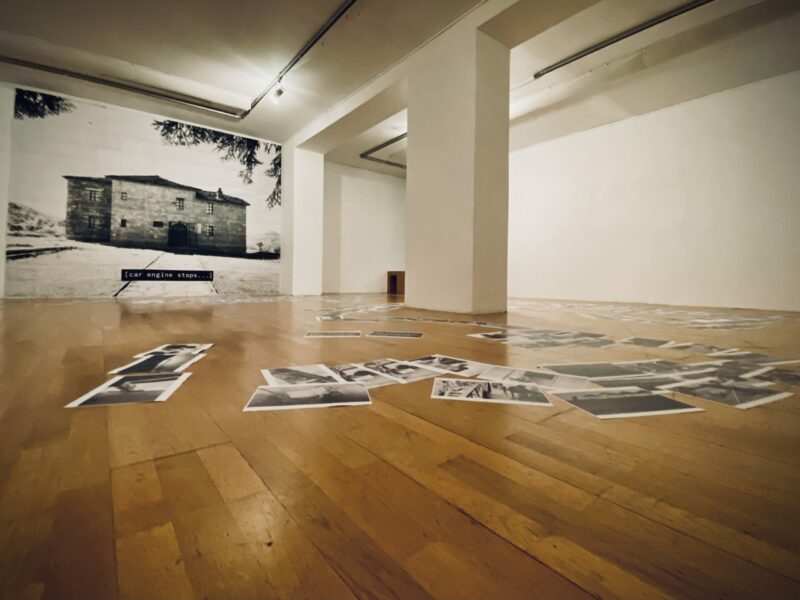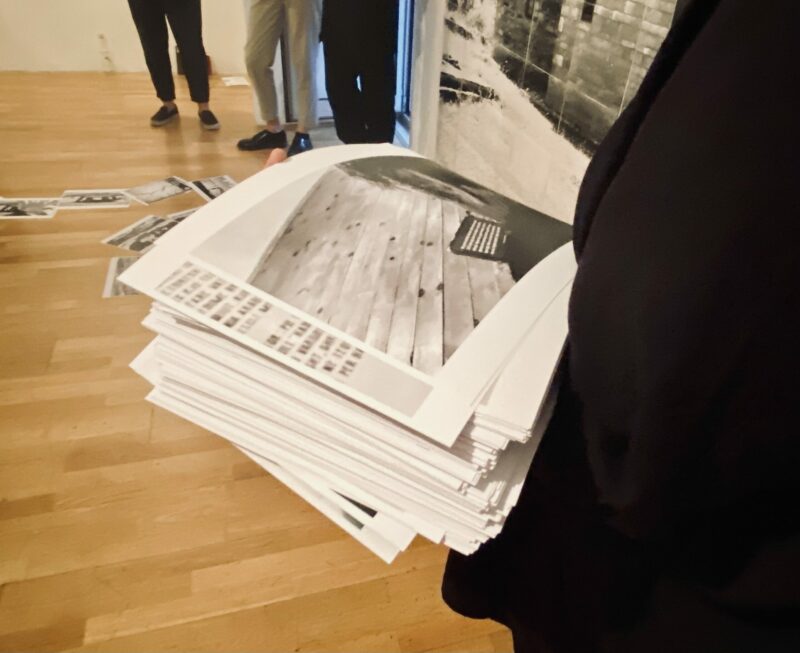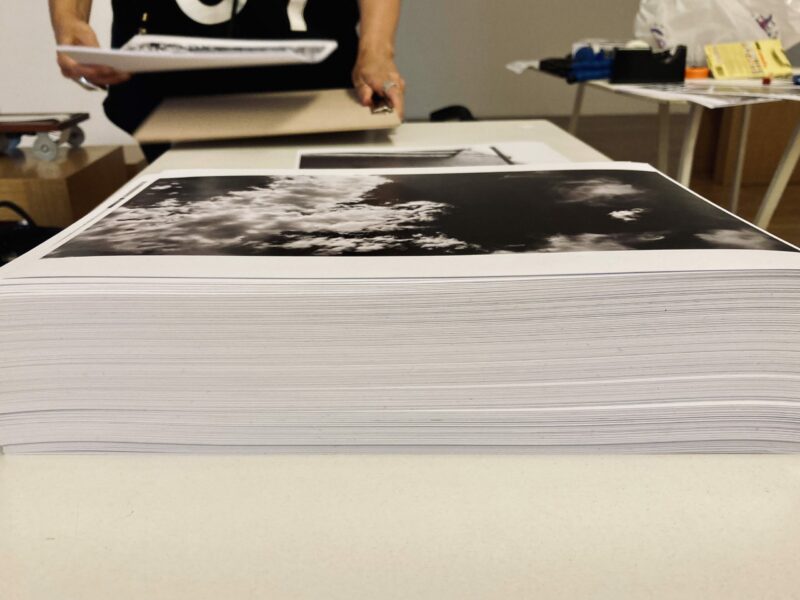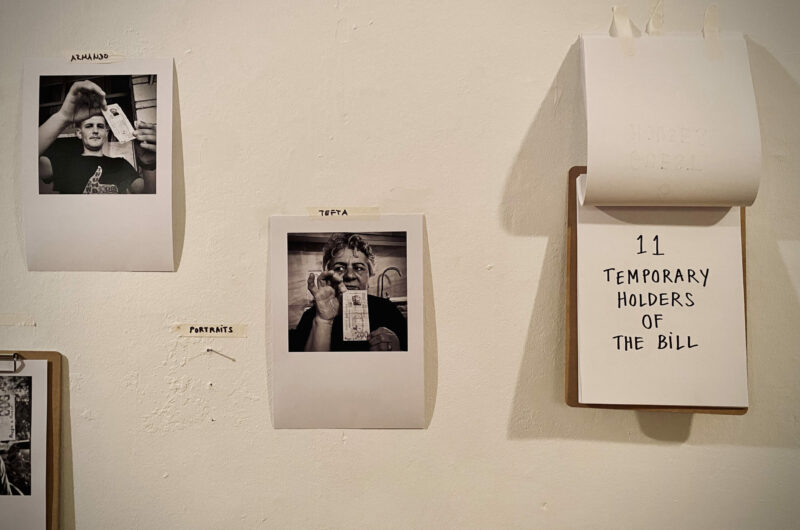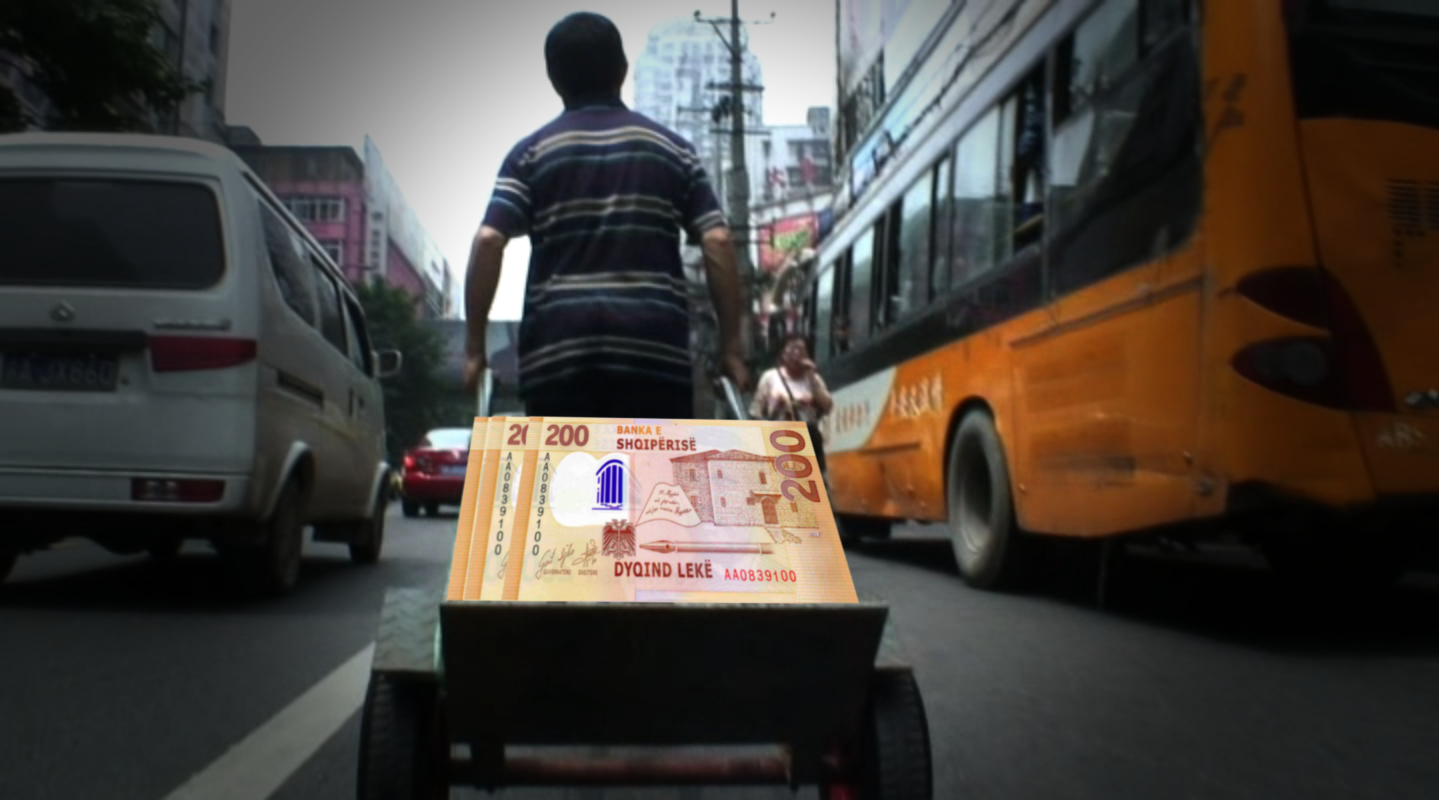

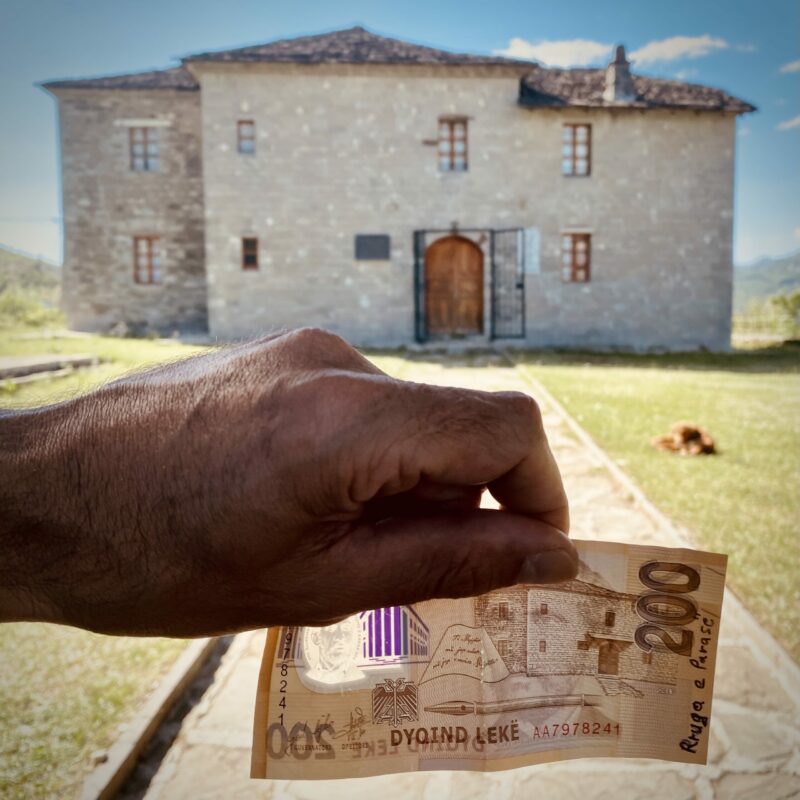
At the invitation of Goethe Zentrum and ZETA gallery Tirana, and co-produced by DOTA Austria, Peter Stamer and Ilya Noé began their ‘Rruga e Parase’ (Albanian for path of money) on June 1st, 2022, starting at the birth house of Naim Frashëri, which illustrates the reverse of the 200 Lek banknote.
Notes from the Road
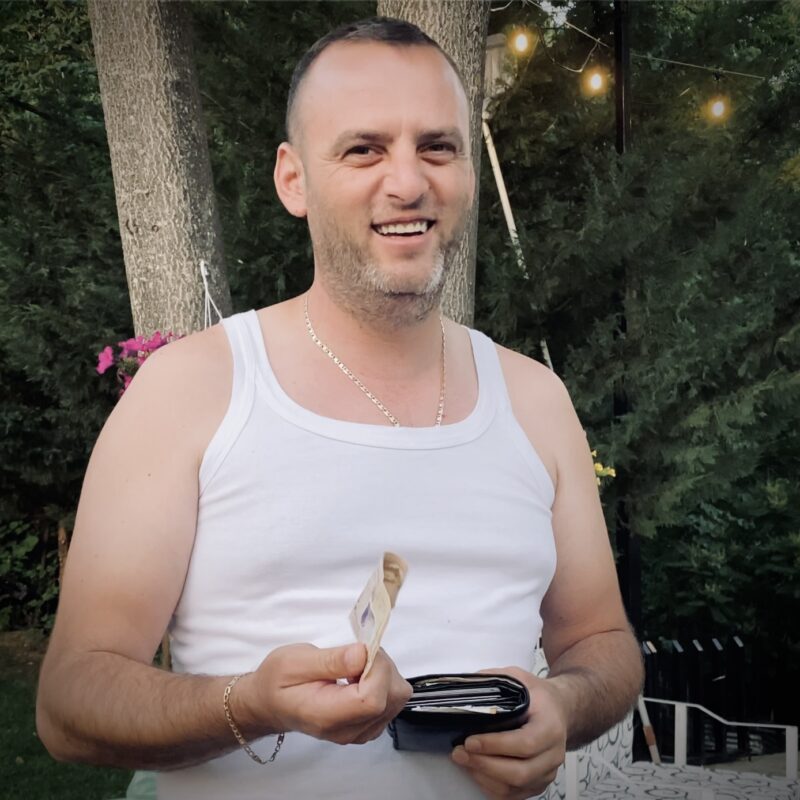
Our project depicts people from everyday life. We do not conduct castings, nor do we seek a representative selection of participants; instead, we trust the path of the banknote to guide us to whoever comes into possession of it. In this way, the project portrays those whose living conditions mirror the broader economic situation of the country. The project is held together by a seemingly random medium—a banknote—that passes through their lives. Yet, the project is not about money. Rather, money functions like a contrast agent: it is the central choreographer whose itinerary we follow, while simultaneously selecting participants for us in a random, serendipitous way.
Take Niko, for example, the used-car dealer who would leave his homeland as soon as possible if not for his wife and children anchoring him there. He has given up his steady job as a veterinarian to run a used luxury car business—an enterprise that offers more financial prospects for his family. In his view, there is no future in this country, and it is hardly worth investing one’s energy in it. The state’s institutions are hostile, requiring either cunning or subversion to navigate. Any investment demands careful strategizing about who gives, who takes, and how to stay ahead.
Or take Afrim, for example—a former wander laborer who is now the proud owner of a hotel and never tires of recounting the foundational myth of his wealth. A self-made man, he walked to Greece in the 1990s to work in restaurants, where he gained both the skills and the capital to build a hotel along a main road near Përmet. Every brick was laid by his own hands. He is the kind of entrepreneur who shuns state assistance, having learned that the administration cannot be trusted. While Niko dreams of leaving the country, Afrim has already left it — and returned.
Or take Roland, for example—a 50-year-old, skeptical, and melancholic wine dealer who trusts neither the government nor the media. Once a local politician and food inspector, he gave up most of his positions out of sheer political frustration. He can recount the history of the hotel where we stayed, tracing its changes in ownership during the post-communist era. Every line on his face seems to carry the weight of his experience, lending authority to his words. He dismisses the entire new economic and political system. When it comes to European regulations and Albania’s potential EU membership, he is more than a skeptic—he is profoundly wary.
Here are three examples of citizens, still in the prime of their lives, who have already lost faith in their country and focus instead on sustaining their private businesses. As trust in institutions has eroded ever since the decline of the communist regime—a regime that was not trustworthy at all.
Margaret Thatcher’s dictum, “There is no such thing as society,” takes on an uncanny resonance here. People look first to themselves and their families as the only reliable means to earn and preserve money. Conversely, family becomes the primary—and often only—site of solidarity, where one helps another. Tefta, our second stop, is married to an accountant who works outside Frashër and is away during the week. She supports her sister Mariana, who is married to the local shepherd. Mariana lives in an old family home, while Tefta remodeled her house into a guesthouse—a source of income.
Guesthouses owned by Tefta, Afrim, or Pandi, all people we meet, somehow embody the connection between money and family: they open doors to sacred private spaces in order to transform them into sources of income. Guests are not to mistake this hospitality for a free lunch—as we learn early on in the project. In this way, the project’s premise is fulfilled: it allows us to encounter the people through our banknote, connecting with them in the intimate sphere of private life while negotiating the economic dimension. Sometimes these practices overlap or blur—the transaction of trust and intimacy is always conditioned first by the economic encounter.
Our homes are temporary. We have compartmentalized friendships, lasting only as long as the bill remains in our possession. We are free to stay at their houses—or nearby—because we have the money. And we are equally free to leave, again because we have the money. What becomes striking in Albania (and, as we have seen, in Mexico) is that freedom has two sides. In our usual understanding, the freedom to leave a place is considered the ultimate expression of individual liberty—a currency long coveted since the decline of Albanian communism.
Among the people we meet, there was not a single person who does not either wish to leave Albania, has not already left and returned, or has relatives who had left. How can a country advance when the primary aspiration of its population is to go away? And even more complicated: how does a society accommodate those who want to leave but cannot afford to, who feel compelled to stay against their will?

We learn that the freedom to stay is far more important for the future of a state than the freedom to leave. A state that cannot provide a sense of future—one that fails to make its citizens want to remain and commit—is destined to fail. Commitment breeds entrepreneurship, fueled by the trust that one can create a viable future. Entrepreneurship, in turn, drives invention, creativity, and the production of innovation.
The people we meet sell their labor or engage in second-hand services. Albania—a nation of used-car dealers—seems to survive on compartmentalized dreams and ready-mades, a reflection of a profound distrust in the productive potential of the country itself.
In the face of stagnation, people tend to stick with what they have and make do—if leaving is not an option—or retreat into the past. Pandi, in Himare, told us that quite a few Albanians feel a longing for the “good old days” of communism, when life was predictable and everyone was taken care of. When democracy fails to provide for its citizens, they long instead for a benevolent dictator. Ironically, the absence of any real freedom is barely remembered, or does not seem to deter this sentiment. Perhaps one could call it nostalgia—the desire to return to a past that is remembered differently than it actually was.

Nostalgia, it seems, affects not only memory but also the way numbers are understood. Our 200 LEK banknote is constantly referred to as “dy mije” LEK—pronounced “dö mi LEK,” or two thousand LEK—which can be confusing in transactions, as 2000 LEK are also called “two thousand.” People still distinguish between old and new LEK: seventy years ago, the communist (!) government fought inflation by reducing the nominal value of the currency by a factor of ten, creating the “new” LEK. Yet there is no visible marker on the bills themselves to indicate this difference. Over the decades, the bills have also been redesigned. Even young people use this nostalgic terminology without necessarily knowing its origin.
We try to familiarize ourselves with this, from our perspective, peculiar habit—as any traveler does who wants to truly get to know a country. To familiarize oneself with the unfamiliar, and at the same time, to un-familiarize oneself with the familiarity we bring along—perhaps this is the distinction between the tourist and the traveler. The tourists cannot help but recognize what is already known, seeking cultural echoes that make them feel at home. The travelers, by contrast, take nothing for granted, questioning and analyzing everything they think they know from home. The tourist travels to confirm that home is good as it is; the traveler travels to unsettle the beliefs he carry from home. In short, the tourist wants to come home unchanged whereas the traveler seeks transformation—and change.
Supported by